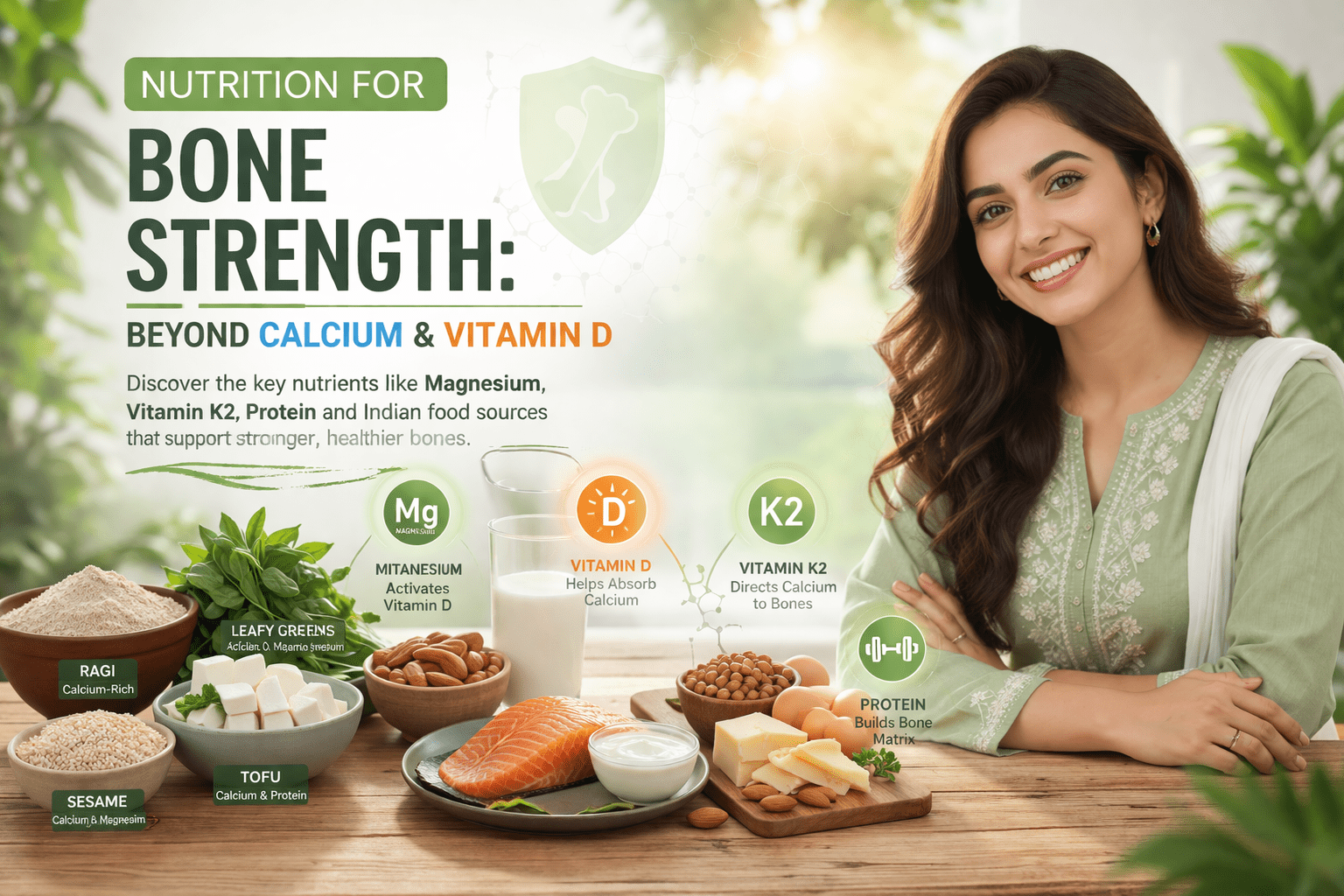
Ask most people which nutrients matter for bone strength and they will say calcium and Vitamin D. They are not wrong — but bone health is far more complex than this two-nutrient picture suggests.
Bone is living tissue, constantly remodelled by specialised cells, and that remodelling process depends on a surprisingly wide range of vitamins and minerals. At StepUp Joints, Lajpat Nagar, we want patients to understand the complete nutritional picture so they can make genuinely effective dietary choices for long-term bone strength and osteoporosis prevention.
Calcium: Still Important, But Often Misunderstood
Calcium is the primary mineral in bone — approximately 99% of the body's calcium is stored in the skeleton. Adults generally need 1,000 mg per day (rising to 1,200 mg for women over 50 and men over 70). However, calcium supplementation without adequate Vitamin D is largely ineffective, because Vitamin D is required for calcium to be absorbed in the gut.
Best dietary sources for Indians:
Ragi tip: With around 344 mg calcium per 100 g, ragi (finger millet) is one of the richest plant-based calcium sources available in India — far higher than most vegetables and comparable to milk.
Vitamin D: The Absorption Key for Calcium
Vitamin D enables calcium absorption from the intestine and directly regulates bone cell activity. Without it, a high-calcium diet contributes little to actual bone density.
Dietary sources are limited — fatty fish, egg yolks, and fortified foods — but supplementation under medical guidance is safe and effective. Learn more in our detailed article on Vitamin D deficiency in India.
Magnesium: The Most Overlooked Bone Mineral
Roughly 60% of the body's magnesium is stored in bone, where it plays a structural role in the crystal lattice of bone mineral. Critically, magnesium activates the enzymes that convert Vitamin D into its active form — meaning magnesium deficiency can cause functional Vitamin D deficiency even when blood Vitamin D levels look normal.
Studies consistently link low magnesium intake with reduced bone mineral density and higher fracture risk.
Good Indian sources of magnesium:
Vitamin K2: The Calcium Traffic Director
Vitamin K2 is less well known but plays a crucial role. It activates a protein called osteocalcin, which binds calcium to the bone matrix. Without adequate K2, absorbed calcium may be deposited in soft tissues — including artery walls — rather than bone. This risk is sometimes worsened by calcium supplementation alone.
K2 is found in fermented foods, cheese, egg yolks, and some meats. Vitamin K1 (found abundantly in dark leafy greens like palak, methi, and sarson) is partially converted to K2 in the body — making these vegetables doubly valuable for bone health.
💡 Clinical Note
If you are taking calcium supplements without Vitamin K2, some of that calcium may not reach your bones. Ask our team at StepUp Joints about the right supplement combination for your needs.
Protein: Building the Bone Scaffold
About 35% of bone by weight is collagen — a protein. Adequate dietary protein supports synthesis of this collagen scaffold, upon which calcium and other minerals are deposited.
Contrary to an older belief that high-protein diets leach calcium from bone, current research shows that appropriate protein intake actively supports bone mineral density, particularly in older adults who are at greatest risk of osteoporosis.
Additional Nutrients Important for Bone Health
Beyond the headline nutrients, several others play meaningful supporting roles in skeletal health:
| Nutrient | Role in Bone Health | Indian Food Sources |
|---|---|---|
| Zinc | Bone cell activity and collagen synthesis | Meat, legumes, pumpkin seeds |
| Vitamin C | Essential cofactor in collagen production | Amla, guava, citrus fruits |
| Phosphorus | Works with calcium in bone mineralisation | Dairy, fish, meat, whole grains |
| Potassium | Maintains acid-base balance; reduces urinary calcium loss | Bananas, sweet potatoes, rajma |
What to Limit for Better Bone Strength
Several common dietary habits and lifestyle factors actively work against bone health:
- Excess sodium — accelerates bone loss and increases fracture risk
- Tobacco — directly impairs bone remodelling and calcium absorption
- Alcohol — disrupts calcium metabolism and reduces bone formation
- Carbonated cola drinks — phosphoric acid content may disrupt calcium balance
- Processed, nutrient-poor foods — consistently associated with lower bone mineral density
Prioritising whole, minimally processed foods is the most effective long-term strategy for maintaining skeletal health.
🏆 The Bottom Line
Bone strength is built over a lifetime, not just in old age. Think of nutrition as a long-term investment in your skeletal health — not just a concern after a fracture or diagnosis. A varied, whole-food diet rich in the nutrients above, combined with weight-bearing exercise and regular bone density monitoring, is the most evidence-based approach available.
StepUp Joints is a specialist orthopaedic clinic in Lajpat Nagar, New Delhi, offering evidence-based care for bone, joint, and musculoskeletal conditions. Our team regularly publishes patient education content to support informed health decisions.
→ Learn about our team